Maintenance
The critical spare parts list every small factory should have (and the Excel template to build it)
Get one offer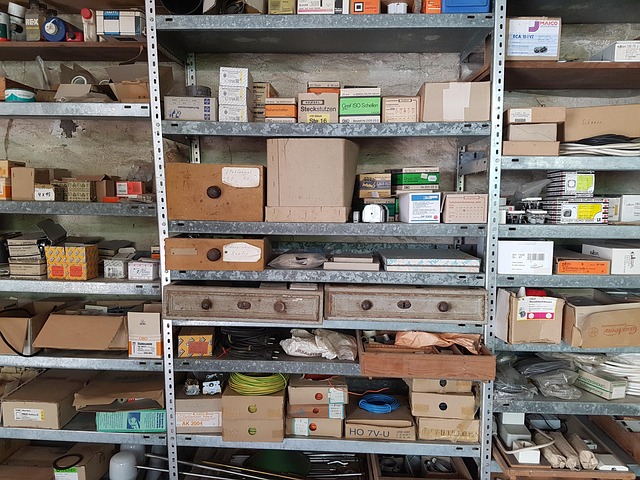
Walk into the stockroom of a typical 60 person factory and you will find two things. Shelves of parts that were bought after a breakdown and never used again, and an empty space where the one part that stops the line should be. Both are the result of the same missing document: a critical spare parts list.
It is not a complicated document. It is a spreadsheet with a few dozen rows, built once and reviewed twice a year. What it does is turn spare parts management from a reaction into a plan, and it usually pays for itself the first time a bearing fails on a Friday afternoon.
This is how to build one, with an Excel layout at the end that you can copy.
What “critical” actually means
A critical spare is a part whose failure stops production, or creates a safety risk, and which cannot be obtained quickly enough to avoid that. All three conditions matter. A part that stops the line but is on the shelf at every distributor in Kaunas is not critical, it is just important. A part with a six week lead time that only affects the coffee machine is not critical either.
So criticality is a combination of three questions. What happens if it fails? How likely is it to fail? How long does it take to replace? The answers put every part into one of three groups: keep it on the shelf, know exactly where to get it fast, or order it when it fails.
Step 1: Start from the machines, not from the stockroom
The mistake most plants make is to start with what they already have on the shelves and try to justify it. Start instead with the equipment. List every machine or line, and for each one ask the maintenance team a single question: if this stopped today, what would we need to fix it?
You are not looking for every part in the machine. You are looking for the parts that have failed before, the parts the manual says to keep, and the parts with a long lead time. A gearbox, a drive, the main bearing, the PLC CPU, the specific sensor that has gone twice. For most machines that is between five and fifteen items.
Write them down with the full manufacturer part number, not a description. “Motor bearing, drive end” becomes “SKF 6308 2RS1 C3”. This is also the moment to find the numbers that nobody has written down anywhere, while the machine is running and not while it is stopped.
Step 2: Score each part on three things
For every line, give a score of 1 to 3 on each of the three questions.
Consequence: 3 if failure stops production or creates a safety issue, 2 if it slows production or takes out one of several lines, 1 if it is an inconvenience.
Likelihood: 3 if it has failed in the last two years or is a known wear part, 2 if it wears but slowly, 1 if it almost never fails.
Lead time: 3 if replacement takes more than a week to obtain, 2 if two to seven days, 1 if it is available next day.
Multiply the three. A part scoring 27 is one you stock without discussion. A part scoring 18 or 12 is probably stocked or at least sourced in advance. A part scoring 1 to 4 you order when needed. The exact thresholds matter less than the fact that every part has been thought about once.
Step 3: Decide the quantity, and it is usually one
For most critical spares in a small factory the right stock quantity is one. Two if the same part sits on several machines or has failed more than once in a year. The instinct to hold three “to be safe” is what fills the stockroom, and it ties up money that would be better spent on a second critical spare for a different machine.
Note the reorder point on the list: when the shelf goes to zero, that is the trigger to order, not the next breakdown. Consumables that are used on a schedule, like filters and belts changed at preventive maintenance, belong on a separate consumables list with a quantity based on the maintenance calendar.
Step 4: For everything you do not stock, know the source
The middle group, parts that matter but are available within a few days, does not need shelf space. It needs a known source. For each of those lines, record who supplies it, the lead time they quoted, and the date you last checked. That is the difference between a two day stop and a two week one when the failure comes.
This is also where obsolescence surfaces. A controller that was current when the machine was installed twelve years ago may no longer be made. Finding that out on the list, while the machine works, gives you time to source a replacement or a compatible successor. Finding it out during a breakdown does not.
The Excel template
A critical spare parts list template excel users can build in an afternoon has these columns, left to right.
Machine or line. Location of the part on the machine. Manufacturer. Manufacturer part number. Description. Consequence score. Likelihood score. Lead time score. Criticality, calculated as the product of the three. Decision: stock, source, or order on failure. Quantity to hold. Quantity on hand. Storage location. Preferred supplier. Quoted lead time. Last price. Date last verified. Notes.
Keep one part per row. If the same part is used on four machines, it appears four times, because the consequence score may differ, and the quantity to hold is decided once by looking across those four rows. Put a filter on the header row and sort by criticality. The top of the sheet is your shelf list. The middle is your sourcing list. The bottom is everything you can stop worrying about.
If you already run a preventive maintenance checklist or a maintenance planning and scheduling calendar, link the two: every scheduled task that consumes a part should point to a row on this sheet, so the consumables get reordered by the calendar rather than by whoever notices the box is empty.
This is not MRO inventory management software, and for a plant of this size it does not need to be. A spare parts management excel sheet that is actually maintained beats a system that is not.
Keeping it alive
A list built once and left alone is out of date within a year. Two habits keep it useful.
After every breakdown, add or update the row. Was the part on the list? Was it on the shelf? Was the supplier’s lead time what they said? Ten minutes while the repair is fresh.
Twice a year, review the whole sheet with the maintenance team. Remove machines that have gone, add ones that have arrived, re-score anything that has failed, and check the supplier and price columns. This is also the moment to look at what is on the shelves that is not on the list, and decide whether it should be.
From the list to the order
The most useful thing about a finished critical spares list is that the shelf group and the sourcing group become a parts list you can send to suppliers as one planned order, once or twice a year, instead of thirty emergency orders. Everything on that list has a verified manufacturer part number, a quantity and a reason.
That is exactly the kind of list PartM8 is built for. Submit it once. Each part number is checked against a catalogue before it goes anywhere, and you confirm any correction. It reaches suppliers whose catalogue covers the lines, and one offer comes back within 24 hours with landed prices, lead times and the supplier named per line. The lead time column on your sheet gets filled in with real numbers, and the shelf gets stocked in one delivery with one invoice. The emergency at two in the afternoon is still possible, but it is a lot less likely.
Frequently asked questions
What should be on a critical spare parts list? Parts whose failure stops production or creates a safety risk and which cannot be obtained quickly. For each one, the full manufacturer part number, the machine it belongs to, a criticality score, the decision to stock or source, the quantity to hold, and the supplier and lead time.
How do I decide which spare parts to stock? Score each part on consequence of failure, likelihood of failure and lead time to replace, each from 1 to 3, and multiply. High scores are stocked, medium scores have a known source and quoted lead time, low scores are ordered when they fail.
How many of each critical spare should a small factory keep? Usually one. Two if the same part is on several machines or has failed more than once in a year. Holding more than that is what fills stockrooms with parts that are never used.
Do I need spare parts management software? Not at the scale of a 20 to 150 person plant. A well built and regularly reviewed Excel sheet with the columns described above does the job. Software helps when there are several sites or thousands of lines.